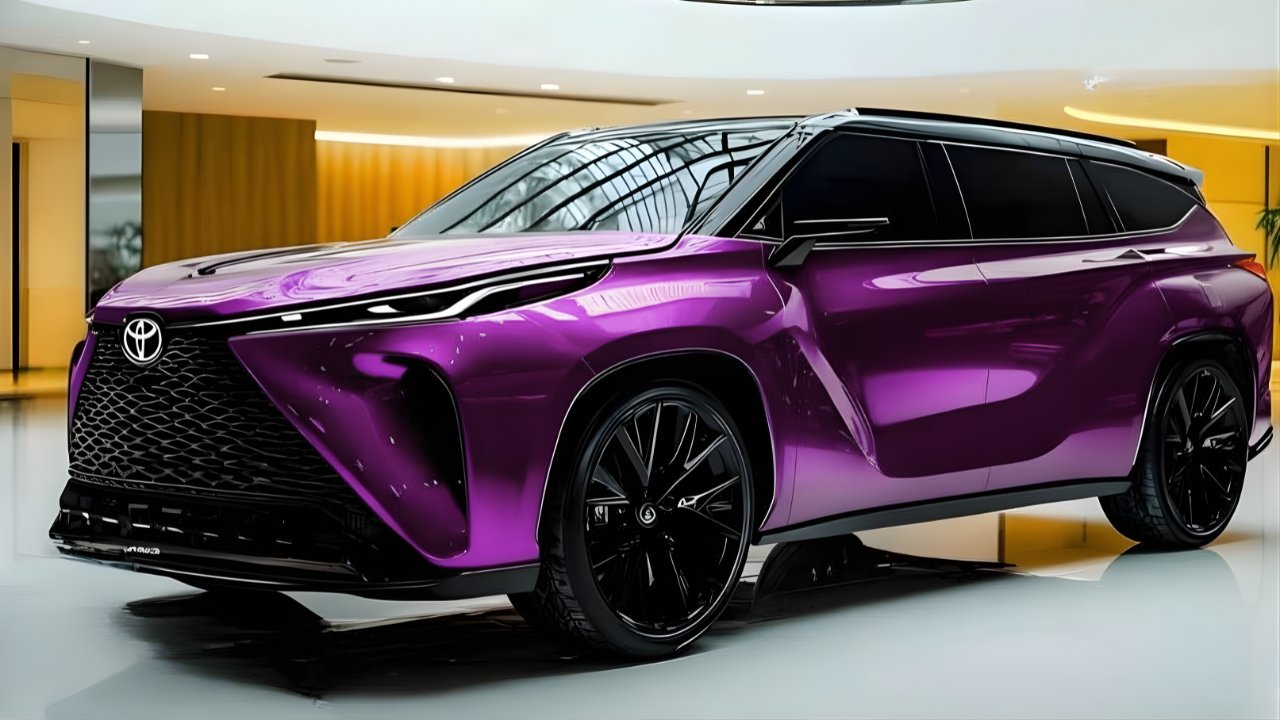
The Toyota Highlander 2026 is the latest evolution of Toyota’s three-row crossover strategy, and this model year tightens the focus on hybrid efficiency, practical family comfort and technology that matters in everyday life.
From Toyota Highlander 2026 styling updates that refine presence on the road to powertrain choices that prioritise fuel economy without leaving owners wanting for real-world responsiveness, the Toyota Highlander 2026 aims to remain a sensible top seller in the midsize SUV segment by balancing comfort, capability and ownership value.
This overview takes a driver-first approach: we’ll examine design and packaging, the hybrid powertrain and its headline outputs, chassis tuning and ride quality, interior technology and safety, ownership considerations and who will find the Highlander most rewarding long term.
Design and presence: tasteful evolution, practical details
Visually the Toyota Highlander 2026 retains the family likeness of the previous generation but introduces cleaner surfaces and tighter details that help the SUV look more modern without abandoning the restrained dignity many buyers prefer.
The Toyota Highlander 2026 front fascia is more sculpted and the light signatures have been refined for a crisp, premium appearance; at the same time, the silhouette prioritises a low drag coefficient to benefit fuel economy, and small details—recessed roof rails, refined wheel designs and a lower, more integrated rear bumper—help the car slide through wind with less noise.
Practical elements are not ignored: the tailgate geometry has been optimised for loading, the second-row access is widened in key trims, and underbody protection is better integrated so the Highlander feels durable in day-to-day family use. The net effect is a vehicle that reads as upscale at a glance but remains focused on usability rather than ostentation.
Powertrain and economy: Toyota Highlander 2026 hybrid heart with usable punch
At the centre of the Toyota Highlander 2026 story is a 2.5-litre four-cylinder hybrid powertrain that combines a petrol engine with electric motors to deliver a combined output that balances economy and usable power. The hybrid system is tuned to provide strong low-end torque for city driving and smooth acceleration on highways, while the integrated continuously variable transmission and electric assist eliminate the abruptness drivers sometimes associate with older hybrid systems.
Official and aggregated specifications place the combined horsepower figure in the low-to-mid 240s—numbers that are sufficient for confident overtakes and on-ramp maneuvers while remaining part of an efficient package rather than a straight performance focus.
Real-world consumption benefits from both the hybrid control logic and aerodynamic improvements: modern Highlanders achieve competitive combined MPG figures in EPA and equivalent testing cycles, and Toyota’s system emphasis is on repeatable economy under mixed driving conditions rather than a one-off laboratory headline.
Chassis, ride and handling: comfort tuned with composure
The Toyota Highlander 2026’s chassis tuning highlights what many family buyers ask for: a supple ride that keeps long highway miles comfortable but also enough composure to feel safe and predictable in tighter, twisty sections or when carrying a full load.
Engineers tightened body stiffness at key points and retuned suspension bushings and damping curves to filter road irregularities without making the car float; steering calibration favors a natural weighting that communicates direction without being overly heavy. Models equipped with optional adaptive dampers allow owners to choose firmer control for more spirited driving or softer settings for relaxed cruising, and electronic aids such as drive-mode selection let drivers bias powertrain and steering feel to their mood.
Braking systems are tuned for predictable feel and fade resistance under real-world loads, and higher trims often feature enhanced brake cooling and larger rotors to keep repeated stops consistent when towing modest loads. The outcome is a three-row SUV that behaves like a mature daily driver rather than a compromised people-mover.
Interior, tech and family friendliness: a lived-in cabin
Inside, the Highlander’s layout emphasizes ergonomics and long-distance comfort: supportive seats with improved bolstering, larger cushion surfaces and available ventilation deliver comfort for extended road trips, while the cabin architecture has been simplified to reduce distraction and improve tactile quality where owners touch most.
The centrepiece on higher trims is a large, responsive infotainment display with crisp graphics, over-the-air update capability and modern smartphone integration; optional features include premium sound and expanded rear entertainment or connectivity packs for families. Storage planning shows incremental improvements—deep centre consoles, improved door pockets and under-floor cargo solutions—so parents and active buyers find sensible places for gear, chargers and kid essentials.
Climate control logic has been refined to reduce thermal lag between zones, and sound deadening improvements render the cabin a calmer environment at speed. These interior changes make the Toyota Highlander 2026 feel like a thoughtful family environment rather than a purely transactional transport device.
Safety and driver assistance: wide coverage, practical automation
Safety remains a headline for the Highlander lineup and the 2026 model comes equipped with Toyota’s latest driver assistance suite, which bundles advanced adaptive cruise behaviours, enhanced lane-centering, pedestrian and cyclist detection and automatic emergency braking tuned for complex urban interactions.
The sensors and algorithms have been refined to reduce false interventions while still providing meaningful assistance in congested traffic and highway driving. Higher trims unlock additional convenience features—parking assist, surround-view cameras and traffic jam assist—that reduce the micro-stress of daily commutes and long trips.
Beyond active aids, structural upgrades and occupant protection strategies have been engineered to meet stringent global safety programs, and the package of airbags and restraint systems ensures that the Highlander protects occupants across a wide range of impact scenarios. The combination of passive and active systems makes the Toyota Highlander 2026 an attractive option for safety-minded families.
Ownership, value and practical considerations
Long-term ownership of a Toyota Highlander 2026 is shaped as much by service networks, warranty support and resale value as by initial equipment. Toyota’s broad dealer footprint and well-established hybrid training for technicians reduce the friction of hybrid ownership—buyers in most markets can access certified service and parts without undue delay.
Fuel savings from the hybrid system deliver meaningful operational cost reductions for high-mileage households, and predictable maintenance intervals paired with Toyota’s durable engineering often translate to higher retained value in the used market. Pricing strategies vary by region and trim; recent shifts across the model range have simplified some lineups and in some markets resulted in higher baseline pricing as AWD and higher equipment levels became standard.
Prospective buyers should compare trim specifics and local incentives, test drive representative configurations with the passenger load they normally carry, and check towing and accessory options if they plan to use the vehicle for trailers or heavier duty tasks. These checks help ensure the Highlander matches real-world needs rather than showroom impressions.
Who should buy the Highlander and why it matters
The Toyota Highlander 2026 is engineered for buyers who need three rows of seating in a package that remains comfortable on long drives, economical in daily commuting and simple to live with across the seasons. Families who routinely take road trips will appreciate the improved comfort, better noise control and the hybrid system’s real-world economy, while buyers transitioning from large sedans will find the Highlander’s driving manners reassuring rather than jarring.
For those who tow occasionally, the hybrid powertrain’s low-end torque and the chassis’ stout braking make light towing chores practical, though heavy towing buyers will want to check spec sheets and recommended limits for their market. In short, if you want a flexible, efficient and durable three-row SUV that prioritises calm cabin life and ownership predictability, the Toyota Highlander 2026 is purpose-built for that role.
Conclusion
The Toyota Highlander 2026 refines a successful formula: it blends a modernised aesthetic with a hybrid powertrain that offers usable power and strong day-to-day economy, a chassis tuned for comfort and composure, and an interior that privileges family usability and connectivity.
Toyota’s improvements focus less on flashy headline gimmicks and more on delivering repeatable value—better noise control, improved materials where they matter, and an assistance suite that genuinely reduces driver stress. Prospective buyers should verify regional trim and drivetrain availability, test the car in their typical load and driving patterns, and evaluate local pricing and service options to ensure the Highlander fits both their lifestyle and long-term ownership plan.
The result is a three-row SUV that continues to make sense for many families and active households who want a dependable, efficient and comfortable vehicle.
Disclaimer:
this article summarises public manufacturer materials and reputable automotive reporting to provide a practical overview; confirm final local specifications, pricing and warranty terms for the Toyota Highlander 2026 with authorised Toyota dealers or official websites in your country before making purchase decisions.
