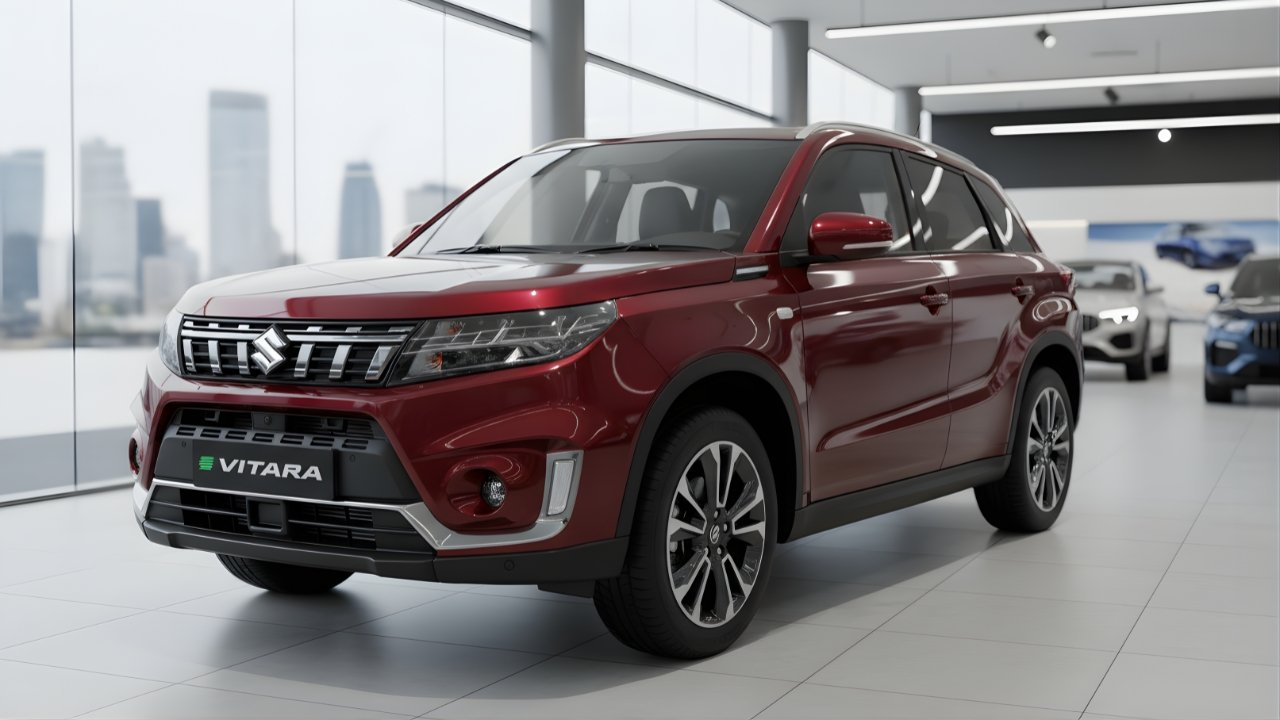
The arrival of two factory-backed compact electric SUVs changes the EV conversation for mainstream buyers: the Maruti Suzuki e Vitara & Toyota Urban Cruiser BEV are examples of how mass-market brands are packaging sensible range, friendly pricing and proven dealer networks into accessible electric mobility.
These Maruti Suzuki e Vitara & Toyota Urban Cruiser BEV 2026— Everyday Amazing Range, Trusted Aftercare models are intended to address the two largest adoption barriers in many markets—cost and convenience—by combining efficient architecture with familiar packaging and straightforward ownership. Where Maruti Suzukiearly EV waves focused on range headlines and premium trimmings, these models emphasise practical usability: conservative but realistic range figures suited to urban and peri-urban driving, simple charging options and interior layouts that prioritize everyday comfort and functionality.
The strategic alliance element behind these vehicles also matters: shared components, validated supplier chains and joint development reduce cost and speed time to market, all of which benefits customers who want an EV that behaves like the mainstream compact SUVs they already know.
This article Maruti Suzuki e Vitara & Toyota Urban Cruiser BEV 2026— Everyday Amazing Range, Trusted Aftercare examines design, powertrain and range, interior and technology, safety and charging practicality, market positioning and ownership considerations, finishing with practical buying advice so readers can decide whether one of these EVs matches their daily driving profile.
Design and Exterior
Both cars wear compact-SUV proportions—the tall greenhouse and upright stance that buyers favour for visibility and packaging—yet the execution deliberately sets each apart with distinct brand cues so buyers know whether they are looking at a Suzuki-derived or Toyota-derived product.
The styling language is pragmatic: tight overhangs, short noses and aerodynamic tailoring around the wheels and underfloor keep drag low without compromising the familiar silhouette. Subtle aero treatments—active shutters in the lower grille, smooth undertray panels and a rear diffuser element—help bring real-world range gains, while the LED lighting signatures provide modern flair without expensive lamp hardware.
Practicality shows in the detailing: durable lower cladding, accessible roof-rail anchors and a tailgate geometry designed for easy loading. Wheel-and-tyre choices are balanced between low rolling resistance for efficiency and adequate sidewall for comfortable ride quality, a compromise that helps these compact electric SUVs feel familiar to mainstream buyers while delivering better energy economy than a conventional petrol equivalent.
Powertrain and Range
Underpinning both vehicles is an electric drivetrain tailored to everyday use: a single-motor, front-driven layout is the baseline for cost efficiency and packaging simplicity, while higher trims offer a higher-output motor and a larger battery pack for buyers who prioritize longer range. Battery chemistry choices lean toward proven NMC or ternary blends that optimise energy density and cycle life, and thermal management systems are scaled to manage repeated fast charges and hot-climate duty without excessive complexity.
Real-world range numbers are deliberately realistic: urban cycle results exceed highway figures significantly, so owners who spend most of their time in city and suburban conditions will see the best economy. Regenerative braking strategies are adjustable so drivers can choose strong single-pedal operation in congested areas or softer regen for a more conventional driving feel.
Charging strategies emphasise practicality: both models support AC charging at common speeds and include DC fast-charging capability at moderate rates that suit public infrastructure—fast enough to restore meaningful range during long trips but engineered to avoid expensive, high-capacity battery architectures that drive cost up. The Maruti Suzuki result is a drivetrain philosophy that favours repeatable everyday performance, predictable battery longevity and reasonable whole-life cost rather than headline-breaking sprint times or extreme range numbers that inflate price.
Interior, Comfort and Technology
Inside Maruti Suzuki e Vitara & Toyota Urban Cruiser BEV 2026— Everyday Amazing Range, Trusted Aftercare, the cabins aim to be intuitive and durable. Materials are chosen with a clear hierarchy: soft materials where occupants touch frequently, resilient textures in high-wear zones and cleanable surfaces for families. The ergonomics prioritize visibility and access: a raised seating position helps ingress and egress, while wide door apertures aid practicality for older passengers.
Instrumentation uses an easy-to-read digital cluster with a central touchscreen sized to balance clarity and simplicity; the UI emphasises energy use, remaining range and nearby charge point search as primary functions rather than a baker’s dozen of secondary apps.
Connectivity options include smartphone mirroring, remote vehicle status via a companion app and over-the-air update support for maps and non-safety-critical features. Practical storage—deep door pockets, under-floor trays and a flexible boot area—keeps daily life simple: groceries, school bags and weekend kit all fit without compromising passenger space.
Climate and HVAC systems are designed to be efficient and fast-acting—important in hot climates where air-conditioning load is a major range factor—so the cars focus on rapid cabin recovery and zoned control to reduce unnecessary energy usage.
Safety, Driver Assistance and Real-World Usability
Safety systems are Maruti Suzuki implemented to meet modern expectations: multi-airbag suites, stability control and structural reinforcements form the passive baseline, while driver-assistance packages include adaptive cruise, lane-keeping and automated emergency braking at levels that vary by trim.
The calibration of ADAS is oriented toward low-speed urban use and highway convenience rather than full autonomous ambitions, giving drivers helpful interventions without intrusive behaviour that could frustrate everyday users. Crash structures and occupant protections are tuned for global regulatory regimes so the cars perform credibly across markets.
Practical usability extends beyond the cabin: the electric architecture includes intuitive charge port placement, standardised charging connectors for regional markets and clear onboard energy displays to demystify factors that influence range. For families and fleet operators, predictable service intervals, standard tyre sizes and accessible maintenance points make the transition to EVs less intimidating because dealers can service these models using familiar workflows and tooling.
Charging Infrastructure and Ownership Practicalities
The Maruti Suzuki success of mainstream electric models often hinges on how well they fit into daily life rather than on ultimate technical specs. These cars are calibrated to be charged overnight on standard home chargers as the primary mode of replenishment—most owners will return to a vehicle with a full battery each morning if typical daily mileage is modest.
For occasional long trips, moderate-rate DC fast charging is supported so drivers can recover enough range during a lunch stop or short break. Importantly, both companies emphasise dealer and partner networks: factory-installed telematics provide charge-point maps, route planners that include verified charging stops and tools to pre-condition the battery to improve charge acceptance on hot or cold days.
From an ownership cost perspective, lower battery capacities and efficient drivetrains reduce the upfront battery premium while keeping operational costs low; warranty structures that cover battery health for a specified period or mileage help reduce buyer anxiety about long-term degradation. Fleet buyers benefit from simple telematics and remote monitoring to manage scheduling, while private buyers get peace of mind from dealer-backed servicing and warranty packages.
Market Positioning and Value Proposition
The combined proposition of these two compact electric SUVs is compelling for buyers who want an approachable EV that slots into existing lifestyle patterns.
Pricing is positioned to be competitive with upper-spec internal-combustion equivalents after incentive schemes are considered, and ownership cost calculations often favour the EV when predictable charging and lower service needs are taken into account. Brand trust plays a crucial role: Maruti Suzuki’s vast service footprint and Toyota’s reputation for reliability make these models attractive to buyers wary of early-adopter risk.
The product strategy favours gradual electrification—introduce affordable, well-supported BEVs in high-volume segments to normalise electric ownership and to use scale to drive further investment in charging and battery economy. Maruti Suzuki Trim ladders offer choices so buyers can prioritise range, tech or comfort according to budget, and the dealer networks are prepared to offer demonstrator fleets that let customers experience range in their typical conditions before purchase.
Conclusion
The Maruti Suzuki e Vitara & Toyota Urban Cruiser BEV pair represent a pragmatic, mainstream approach to electrification: not headline-chasing hypercars, but usable, affordable and serviceable EVs that address the real-world concerns of daily drivers.
They Maruti Suzuki focus on what matters most for many buyers—reliable range for city and suburban use, easy overnight charging, familiar packaging and the backing of large dealer networks—rather than on maximum-range numbers that push the price out of reach.
For prospective buyers the sensible steps are clear: estimate your daily mileage and charging access realistically, choose the Maruti Suzuki battery and trim that match your regular use-case rather than the maximum option, and test the vehicle with typical luggage and passenger loads to understand real-world range. With sensible specification choices and the advantage of sizable service networks, these models could be the ones that move EV ownership from the early adopter segment into the mainstream.
Disclaimer:
This article Maruti Suzuki is informational and based on typical product strategies, engineering choices and market positioning; readers should verify final specifications, range figures, pricing and warranty details with official Maruti Suzuki and Toyota dealers before making a purchase decision.
