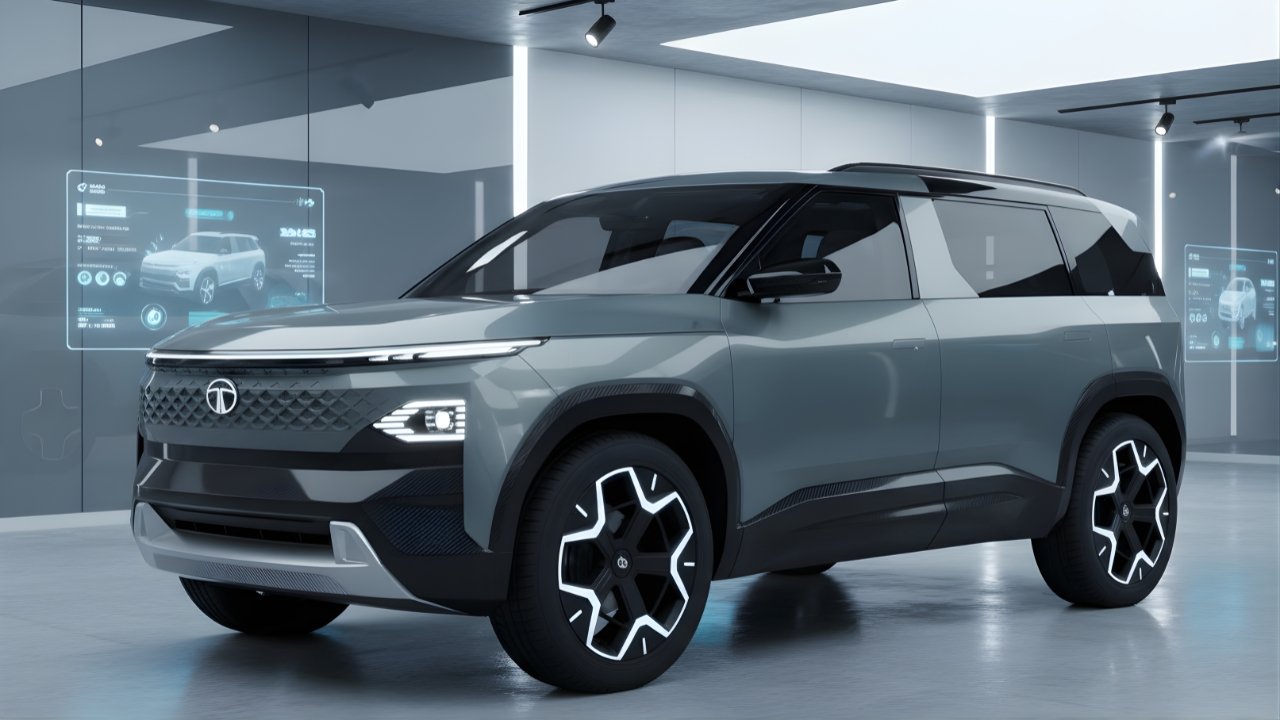
The automotive world has been watching Tata Motors closely and the arrival of the New Tata Sierra marks a deliberate push to reframe how mid-size SUVs are judged in value-driven markets; the New Tata Sierra combines contemporary packaging with a clear focus on comfort, capability and everyday usability.
The project behind the New Tata Sierra set out to deliver an SUV that appeals to families and fleet buyers while offering the sort of design flair and platform sophistication normally associated with premium competitors.
Tata’s decision to underpin the model with the ARGOS architecture is not just an engineering choice but a strategic move—ARGOS provides a scalable base for electrified systems, refined ride dynamics and modular comfort features, and it allows the New Tata Sierra to be competitive across multiple markets without heavy compromise.
This introduction outlines the core intent: blend modern SUV virtues—space, safety, economy and tech—into a cohesive package that remains affordable to own.
Design Language and Exterior Presence
Visually the New Tata Sierra balances contemporary proportions with restrained details that reference the brand’s heritage while signalling a modern silhouette that appeals to a broader buyer base. The front fascia uses a compact grille integrated with adaptive LED lighting elements and a sculpted bumper that improves airflow into the ARGOS-optimised cooling architecture.
The profile emphasises a long wheelbase and upright greenhouse for maximum cabin volume, while the rear adopts a clean, horizontal lightbar and a practical tailgate opening that eases loading. Functional exterior choices—modular lower cladding, easily replaceable sill panels and factory-rated roof rails—reflect a pragmatic approach to ownership: durability matters when cars are used daily.
Wheel and tyre packages are chosen to balance ride comfort and rolling efficiency; the New Tata Sierra’s designers made choices intended to keep cabin noise down at highway speeds while preserving traction and predictable steering feedback in urban and light off-road conditions. In short, the car looks modern without abandoning the practical cues that matter in real life.
ARGOS Architecture: The Technical Backbone
ARGOS is the structural and systems backbone that enables the New Tata Sierra to offer modularity, refinement and future-ready capability. ARGOS was engineered to accept a variety of powertrains and to provide an optimised crash structure while minimising weight where possible.
The architecture’s modular battery and cabling pathways simplify integration of hybrid or battery-electric variants later in the lifecycle, and the placement of ancillaries and service points was calibrated to reduce workshop labour times. Ride and handling benefits are tangible: ARGOS’s increased torsional stiffness enables suspension tuning that separates ride comfort from mid-corner control, so the New Tata Sierra feels composed under load and comfortable on long trips.
Thermal spaces—radiator, gearbox cooler, and battery conditioning circuits—are laid out to maximise service accessibility and to reduce thermal cross-talk in demanding use, which is particularly important for buyers in hot-climate geographies or those who tow occasionally. ARGOS therefore isn’t just a marketing term; it is a pragmatic engineering platform that directly supports the New Tata Sierra’s day-to-day strengths.
Interior Packaging and Practicality
Inside the New Tata Sierra the priority is usable space rather than gimmicks: the tall greenhouse, low transmission tunnel and long wheelbase combine to produce generous rear-seat room and a trunk that swallows family luggage with ease.
Seat design balances lateral support and long-distance comfort; adjustable lumbar support, available ventilation and multi-way headrests are included on higher trims for owners who spend long hours behind the wheel. Clever storage solutions—deep door pockets, under-seat trays and a modular centre console with lockable compartments—make the cabin practical for work and family life. Child-seat anchorage points are accessible and clearly marked, and the cabin layout minimises awkward reaches to common controls so everyday ergonomics are improved.
Noise, vibration and harshness treatments were applied selectively: thicker glazing, tuned bulkhead insulation and targeted underbody damping reduce the intrusion of road and wind noise without making the cabin feel over-insulated or disconnected. The result is a living space that works for shopping, school runs and longer family trips.
Powertrains, Efficiency and Real-World Performance
The New Tata Sierra is offered with a set of powertrains chosen to match real buyer needs: efficient small-displacement turbocharged petrols and a refined diesel option where markets demand torque for towing and long-distance cruising.
Each engine benefits from low-friction internals, precise fuel injection and carefully selected gear ratios to keep highway revs moderate—this reduces NVH and improves fuel economy in long runs. Transmission choices include a crisp manual for value-oriented buyers and an efficient automatic for owners prioritising convenience.
Thermals were emphasised in the development program—charge-air routing, oil and transmission cooling and fan control logic were scaled to cope with repeated high-load operation so the New Tata Sierra can be used for towing or in hilly terrain with less risk of derate.
Regenerative or mild-hybrid assistance is being explored for select trims to improve urban stop–start economy and to provide torque fill that makes city driving more responsive. The engineers’ guiding principle was repeatable performance and predictable running costs rather than headline sprint times—this aligns with the ownership profile most likely to buy the New Tata Sierra.
Chassis, Ride Comfort and Handling
ARGOS’s stiff structure allows suspension engineers to dial ride comfort without sacrificing control: multi-link rear setups or carefully valved torsion beam options are matched to trim and wheel selection so the New Tata Sierra preserves compliance over broken urban surfaces while remaining confident at chassis limits. Dampers are valved for progressive responses, meaning the car soaks small bumps politely and resists mid-corner wallow when loaded.
Steering calibration is tuned for predictable weighting in city manoeuvres and precise feedback at higher speeds so the driver can place the car with confidence. Brake systems were chosen for thermal endurance and consistent pedal feel: ventilated front discs and robust pads maintain stopping performance under heavy use, an important factor when carrying family loads or towing light trailers. The net result is a vehicle that is comfortable for daily commuting, stable on highways and cooperative on twisty country roads—attributes that are valuable for midsize SUV buyers.
Technology, Safety and Connectivity
The New Tata Sierra bundles modern safety systems with pragmatic connectivity: multi-stage airbags, reinforced occupant cells and electronic stability systems are standard across the range while advanced driver aids—adaptive cruise, lane-keep assist and automated emergency braking—appear on higher trims.
These systems are calibrated to intervene smoothly, reducing driver annoyance while enhancing real-world protection. Connectivity includes a responsive infotainment system, smartphone mirroring, and telematics features that offer remote diagnostics and over-the-air updates where local networks permit.
For fleet buyers and families alike, predictive maintenance alerts and a clear service schedule reduce downtime and help plan ownership costs. Importantly, safety architecture is designed to be repair-friendly: commonly damaged panels, lighting clusters and crash elements are modular so insurance repairs are less expensive and quicker, preserving the New Tata Sierra’s usability after minor incidents.
Market Positioning, Ownership and Value
Tata positions the New Tata Sierra to disrupt the midsize SUV segment by offering a combination of modern platform benefits, sensible pricing and broad dealer coverage that many premium competitors struggle to match. The ARGOS architecture lets Tata scale variants across markets—ICE, mild-hybrid or full-electric over time—so the New Tata Sierra can adapt to regional regulatory and buyer demands without a costly redesign.
Warranty and service packages are competitive, and the company emphasises parts availability and trained technician networks to keep downtime low. Resale prospects are supported by clear documentation of factory options and certified pre-owned programs, and the focus on predictable running costs—efficient drivetrains, sensible service intervals and accessible maintenance points—helps fleet managers and private buyers forecast total ownership expenses.
For buyers considering the New Tata Sierra it’s prudent to examine trim-level feature lists carefully, match cooling and towing packages to intended use, and to test drive with realistic passenger and luggage loads so the chosen configuration meets daily needs.
Conclusion
The New Tata Sierra is a considered attempt to combine modern engineering, practical packaging and accessible ownership into a midsize SUV that can appeal to families, fleet buyers and aspirational private owners alike.
Backed by the ARGOS architecture, the New Tata Sierra provides a platform capable of evolving—supporting efficient petrol and diesel powertrains now and enabling electrified variants later—while delivering improved ride comfort, predictable running costs and safety systems that matter in everyday use.
Prospective buyers should prioritise checking local dealer support for software updates and service, test the vehicle with representative loads and opt for packages that match their typical use—whether that’s long highway journeys, school runs, or occasional towing. In short, the New Tata Sierra aims to stir up the mid-size SUV segment by delivering pragmatic innovation where it counts: durability, comfort and day-to-day value.
Disclaimer:
This article is informational and reflects analysis based on likely engineering choices, announced platform intent and market positioning; readers should verify official specifications, pricing and warranty details with Tata Motors or authorised dealers before making purchase decisions.
