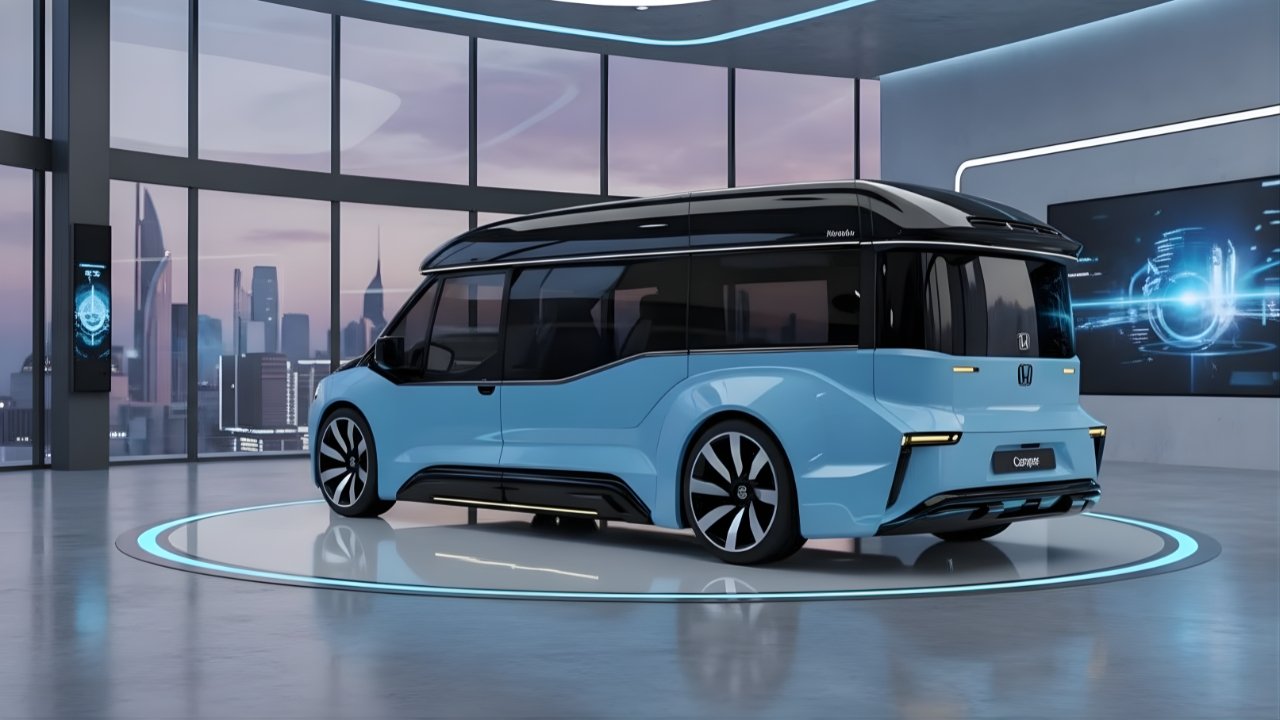
The 2026 Honda N BOX Camper arrives as a thoughtful reinterpretation of the kei-van camper concept, blending compact dimensions with clever living space packaging and modern systems that make short- and medium-length trips genuinely comfortable.
In a market where small footprint vehicles are prized for urban ease, the 2026 Honda N BOX Camper takes that advantage and extends it into weekend travel by rethinking storage, energy management and convertible interior architecture so owners don’t have to choose between city convenience and outdoor utility.
Engineers and designers partnered early in the program to prioritise interior volume efficiency, lightweight but robust materials and factory-integrated systems that avoid the caveats commonly associated with aftermarket conversions.
The result is a van that feels purpose-built rather than improvised: everything from the fold-flat sleeping platform to the integrated utility sockets has a specific intent, and the emphasis on tried-and-tested components underlines Honda’s aim to make vehicle ownership simple and dependable for first-time camper buyers and experienced weekend adventurers alike.
Design and Exterior
Outside the 2026 Honda N BOX Camper retains the familiar friendly proportions of the N BOX family but incorporates subtle cues and practical details that signal its camping intent without adding unnecessary bulk. A slightly raised roofline and a refined aero profile increase headroom and reduce highway buffeting while maintaining a low enough centre of gravity for confident handling.
Exterior access points 2026 Honda N BOX Camper are thoughtfully placed: a concealed shore-power inlet, easy-access freshwater fill and a neat exterior locker for the single-use utility items owners typically carry. The body uses durable lower cladding in high-contact zones and corrosion-resistant treatments to help owners in coastal or winter-salt climates, while factory-fitted roof-mounting points accept solar panels or lightweight roof racks without drilling or aftermarket compromise.
Lighting adopts efficient LED arrays and there are optional auxiliary spots wired back to the factory-installed leisure battery, making dusk and dawn campsite tasks easier. The exterior composition keeps everyday practicality front-and-centre: narrow overall width for tight parking, a short turning circle for urban manoeuvres and a rear door geometry that eases loading of bulky camping items.
Interior Layout and Practicality
Inside the cabin the 2026 Honda N BOX Camper focuses on modularity and durability so two people can live comfortably for short trips without the weight and complexity of large motorhomes. The core of the layout is a configurable living bay: rear seats fold into a flat sleeping platform quickly and intuitively, while the centre console and bench rearrange to form dining or working surfaces.
2026 Honda N BOX Camper Storage has been integrated into every available cavity: deep under-seat trays, lockable overhead compartments and a cleverly partitioned boot with tie-downs allow cooks and campers to keep essentials organised. A compact galley module slides into a guided bay and offers a sink with manual-pump water supply, a two-burner cooker and a drawer fridge; when not in use these components stow flush so the living area remains uncluttered.
Materials were selected for easy cleaning—wipeable textiles and water-resistant finishes in high-contact zones—and seat covers are removable and replaceable, reflecting a practical approach to real-world ownership. Ventilation is comprehensive: roof hatches with insect screens, powered extractor fans and effective cross-ventilation paths keep the interior comfortable in humid overnight conditions while retaining the ability to insulate during colder trips.
Power, Energy Management and Range
An essential element of small camper usability is onboard energy management and the 2026 Honda N BOX Camper introduces a factory-integrated system designed to support refrigeration, lighting and modest cooking without forcing constant generator use. A dedicated leisure battery is paired with an intelligent charger that accepts shore power and manages alternator charging when driving so owners return to camp with a healthy reserve.
Optional solar panels mount on the factory roof rails and feed a smart charge controller that prioritises critical systems—fridge, ventilation and safety circuits—when battery levels dip, then shifts to bulk charging when sunlight is abundant. The base drivetrains are economical small-displacement petrol units optimised for mixed urban and highway use, giving the van good consumption on long runs and a low cost per kilometre for regular weekend trips.
For buyers in regions where it’s available, a mild-hybrid layout improves stop–start efficiency and supplies additional electric torque during low-speed manoeuvres, which is especially useful on hilly access roads to campsites. Thermal comfort systems were scaled to be effective yet energy-conscious so heating and cooling cycles consume predictable amounts of stored energy and do not unduly stress the leisure system during multi-day off-grid stays.
Driving Dynamics and Chassis Behaviour
Driving the 2026 Honda N BOX Camper feels reassuringly similar to the standard N BOX but with adaptations that handle the added mass and changed centre of gravity associated with camper fitments. Suspension tuning favours compliance over tautness—this preserves ride comfort over uneven rural roads and reduces cabin disturbance while sleeping aboard—while anti-roll measures keep body motions controlled so manoeuvring at campsite entrances is predictable.
2026 Honda N BOX Camper Steering weight and response remain light at low speeds for parking and narrow-track navigation, and the van’s compact footprint allows confident lane changes and easy city parking, a key advantage over bulky campers. Brake systems have been matched to the camper’s typical payload; regenerative tendencies in mild-hybrid variants assist in retarding energy on descents and recovering some charge for auxiliary systems.
Noise reduction measures—thicker glazing, bespoke bulkhead insulation and tuned door seals—help keep wind and tyre intrusion in check, making overnight sleeping more restful and conversations more comfortable at highway speeds. Importantly, the vehicle’s load-placement guidance and clearly labelled GVWR markers make it easy for owners to distribute gear sensibly, which preserves handling balance and safety.
Technology, Safety and Connectivity
Modern safety and connectivity features make the 2026 Honda N BOX Camper an easy vehicle to live with for both new and returning campers. The van offers a suite of driver aids—adaptive cruise, lane-keeping support and automatic emergency braking—that reduce fatigue on long highway legs to the campsite, and parking aids including multi-view cameras and ultrasonic sensors simplify tight reversing manoeuvres common in campgrounds.
On the camping side 2026 Honda N BOX Camper the tech stack includes an integrated app that reports leisure battery state, estimated remaining hours for refrigeration and power draw of optional appliances; owners can plan usage or switch to conservation modes remotely. Over-the-air updates for the infotainment and vehicle management systems ensure maps and energy-management logic remain current without frequent dealer visits.
Passive safety has not been neglected: a reinforced occupant cell, multiple airbags and ISOFIX points combine with clearly annotated load and service points to give families confidence. For owners who take long, remote trips optional satellite communications packages provide an additional layer of reassurance in areas with poor mobile coverage.
Ownership, Servicing and Conclusion
Ownership of the 2026 Honda N BOX Camper is designed to be straightforward: service intervals align with regular N BOX models so authorised dealer networks can handle both vehicle and camper module checks in a single visit, and factory-fit components are supported under Honda’s warranty to avoid the complications of aftermarket conversions.
Resale value benefits from a documented factory conversion and the use of widely available mechanical components that keep maintenance predictable and inexpensive. For buyers considering this class of vehicle the 2026 Honda N BOX Camper represents a compelling proposition: it permits urban owners to keep a single footprint for daily life while offering a genuinely usable living space for short adventures, and factory integration reduces the risk often associated with bespoke van conversions.
Prospective owners should evaluate their typical trip lengths and energy needs—opting for solar or lithium leisure battery upgrades if extended off-grid stays are planned—and should inspect dealer-fit accessory bundles that preserve warranty coverage. In short, this camper is a pragmatic, well-engineered answer for people who want small-van convenience combined with honest, usable camping capability.
Disclaimer:
This article 2026 Honda N BOX Camper is informational and based on likely feature sets, engineering directions and market positioning; readers should confirm exact specifications, options, pricing and availability with official Honda sources or authorised dealers before making a purchase decision.
