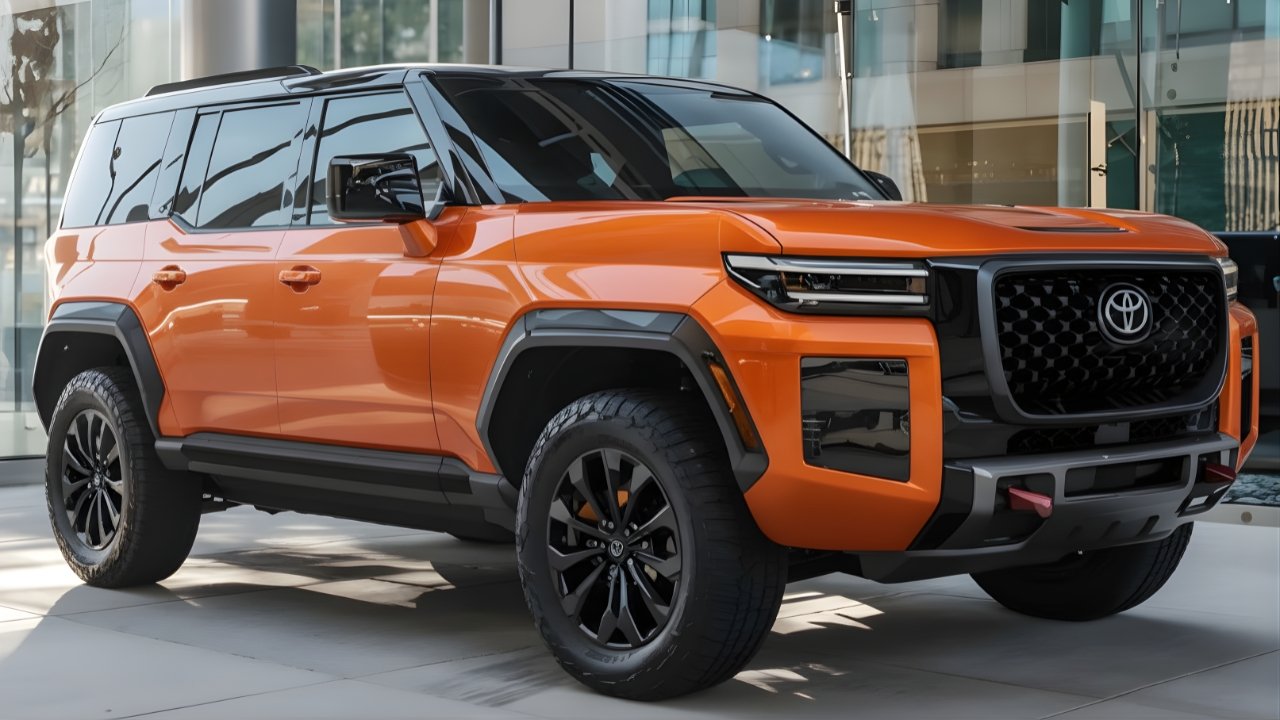
The 2026 Toyota Prado arrives as a carefully evolved flagship in Toyota’s mid-size SUV line, blending heritage off-road capability with hybridised powertrains and significantly upgraded interior refinement to appeal to families, adventure seekers and tech-minded buyers alike.
Historically the Prado has been a go-to choice for buyers who demand real go-anywhere competence combined with everyday usability, and the 2026 Toyota Prado takes that brief seriously by widening the model’s powertrain ladder, sharpening chassis dynamics and adding a modern cabin that contrasts durable materials with premium touches.
From long-distance desert runs to urban school runs, the 2026 Toyota Prado aims to be equally comfortable and confident, and in this overview we cover design, performance, interior appointments, capability, technology, safety and ownership considerations so prospective buyers can understand what this next-generation Prado promises in real-world use.
Design and Exterior Presence
Visually the 2026 Toyota Prado updates its stance with stronger proportions and a bolder front face that cues robustness without appearing ostentatious; the grille and lighting signatures take inspiration from larger Land Cruiser family members yet are scaled to suit the Prado’s mid-size footprint, giving the vehicle a purposeful road presence that reads as capable rather than aggressive.
Wheel arches are subtly widened to accept larger off-road tyres and improved suspension travel, while purposeful cladding and skid plates are integrated into the body architecture so protection and aesthetics are part of the original design rather than aftermarket add-ons.
Aerodynamic refinements—underbody panels, a more efficient tailgate contour and active grille shutters on higher trims—improve fuel economy at speed and damp wind noise without diluting the SUV’s functional look.
Practical exterior touches such as flush roof-rail mounts, factory-fitted recovery points and an intelligently placed service hatch for water and electrical hookups reflect Toyota’s emphasis on usability: the 2026 Toyota Prado is designed to look the part at the trailhead and to be comfortable at the airport valet.
Interior, Materials and Comfort
Inside the 2026 Toyota Prado the cabin is a careful blend of toughness and polish: primary touchpoints use soft-touch, durable leathers and woven textiles while lower zones are covered in easy-clean finishes engineered to stand up to outdoor kit and muddy boots.
Ergonomics are prioritised with driver-centric placement of the primary controls, a large central display angled to reduce glare and intuitive physical shortcuts for climate and towing functions so essential setup can be completed without menu diving.
Seating is redesigned for long-distance comfort with improved cushion geometry and extended bolstering options in higher trims; rear occupants benefit from generous knee room and practical touches such as rear climate vents, multiple USB outlets and optional reclining functionality for extended journeys.
Storage has been rethought with deep central consoles, under-seat bins and secure glovebox cavities; the tailgate incorporates integrated tie-downs and a configurable load floor that converts between flat cargo mode and additional battery or tool storage.
The interior’s dual personality—hardwearing where needed, luxurious where lived in—makes the 2026 Toyota Prado appealing to mixed-use buyers who require a vehicle that is both a field tool and a family transport.
Powertrains and Performance
Toyota’s propulsion strategy for the 2026 Toyota Prado embraces hybridisation while retaining strong diesel and petrol choices in markets where those options remain relevant, producing a roster of powertrains that balances efficiency, torque delivery and towing capability.
The headline addition is a more widely available full-hybrid variant that pairs a responsive petrol engine with electric motors to deliver immediate low-end torque—a crucial benefit when starting on slippery tracks or hauling trailers—while offering notable gains in urban fuel economy.
For buyers seeking traditional long-range capability, turbocharged diesel options are retained in certain regions with improved emissions control and stronger mid-range torque for towing heavy loads. Higher-performance petrol variants and possible mild-hybrid inline-six options cater to those who want brisker acceleration and quieter highway refinement.
Transmission tuning focuses on delivering usable gearing for both low-speed control and economical cruising, and heavy-duty cooling packages join stout transmission internals in towing-oriented trims so the Prado remains reliable under duress.
Chassis, Off-Road Capability and Towing
Off-road competence remains a pillar of the Prado’s identity, and the 2026 Toyota Prado reinforces that reputation with an updated chassis that uses selective reinforcement and tuned suspension geometry to balance ride comfort with articulation and control.
Optional adaptive dampers and multi-mode terrain response allow the vehicle to adapt between highway cruising, rocky climbs and soft sand with minimal driver input, while locking differentials, low-range gearing and a robust transfer case ensure traction when the path gets technical.
For towing, the Prado offers trailer-aware stability control, integrated trailer hookup guides and heavy-duty brakes matched to the vehicle’s rated towing capacities, which are designed to be competitive in the segment. Underbody protection, raised air intake options and engine breather routing in specific packages extend the vehicle’s capability for water crossings and abrasive trail conditions.
Together, these systems make the 2026 Toyota Prado a credible choice for overlanders and recreational users who plan serious off-grid excursions yet also want civilized behaviour on paved roads.
Technology, Safety and Driver Assistance
The 2026 Toyota Prado brings a modern raft of technology into the cabin and safety architecture that enhances convenience while prioritising occupant protection; the infotainment system supports over-the-air updates, wireless smartphone integration and a tailored off-road display mode that shows pitch, roll, compass, and trailer angle to assist drivers in challenging terrain.
Advanced driver assistance systems have been broadened and calibrated for higher mass dynamics—adaptive cruise with curve-aware behaviour, lane-keep assist tolerant of rough surfaces and a more capable automatic emergency braking system that looks out for pedestrians and cyclists in urban environments.
A suite of cameras and optional lidar or radar sensors provides enhanced situational awareness for campsite manoeuvres and low-speed trail navigation, and Toyota’s connected services enable remote diagnostics, vehicle health alerts and route planning that considers low-clearance roads and service stops. For families, expanded airbag coverage and improved occupant detection systems complement the active aids to deliver a safety package that addresses both highway and off-road risks.
Ownership, Practicality and Market Fit
Owning the 2026 Toyota Prado is pitched as a pragmatic investment in capability and reliability: Toyota’s global dealer network supports mechanical servicing and parts supply in many off-road markets, and factory-backed accessory packages let buyers add recovery gear, roof systems and expedition-grade electrical kits without voiding warranties.
Service intervals and recommended accessory installations are documented to make it easier for fleet managers and private owners to schedule maintenance, while optional extended warranties and roadside assistance plans reduce the financial uncertainty of long-distance travel.
The Prado’s market positioning is intentionally broad—competent enough for demanding recreational users yet comfortable and refined for parents and executives—so buyers should select trims and option packages that match intended use: off-road packs and reinforced suspension for overlanders, hybrid powertrains for urban commuters who occasionally tow, and premium cabins for owners prioritising on-road refinement.
Resale tends to benefit from Toyota’s reputation for durability, particularly in regions where rugged capability is prized, which supports the Prado’s appeal as a long-term ownership choice.
Conclusion
The 2026 Toyota Prado is a thoughtfully modernised iteration of an established all-terrain icon: it brings hybrid power to meaningful trims, tightens chassis and NVH characteristics for more civilized on-road manners, and upgrades the cabin with materials and technology that make long trips more comfortable and connected.
Whether you require a dependable workhorse for remote missions or a refined family SUV that can also tackle muddy tracks and trailer duty, the 2026 Toyota Prado offers a credible mix of capability, efficiency and premium touches that broaden its appeal.
Prospective buyers should arrange an in-person evaluation to test representative trims, confirm real-world towing figures and verify regional equipment and warranty packages before purchase to ensure the vehicle matches both adventure ambitions and daily needs.
Disclaimer:
this article synthesises manufacturer briefings, reputable industry coverage and practical ownership considerations; verify final specifications, regional trim availability, pricing and warranty terms with authorised Toyota dealers or official Toyota publications before making a purchase decision.
