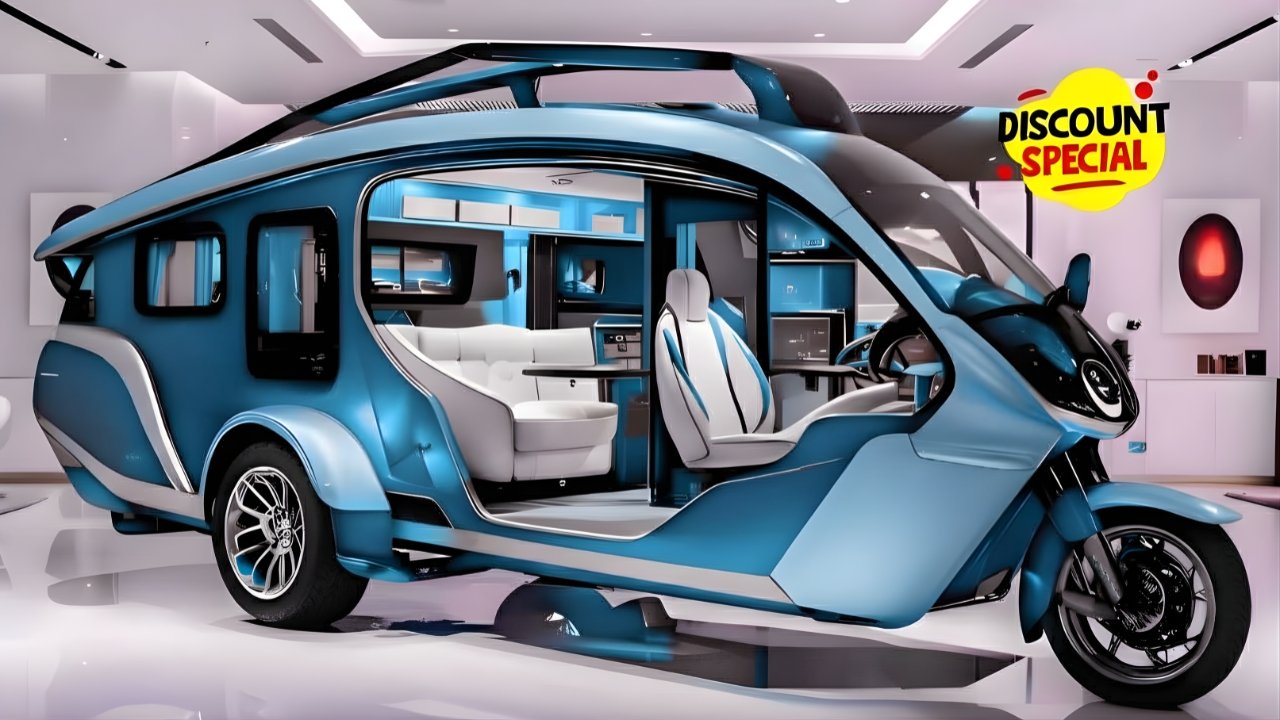
The idea 2026 Tricycle RV Camper of shrinking a motorhome to a nimble, three-wheeled platform sounds like a bold experiment until you consider the modern demands of urban adventurers, and the 2026 Tricycle RV Camper emerges as a refined answer to that call: compact enough to slip into tight city parking and clever enough to offer genuine live-aboard comforts.
Unlike micro campers that feel like afterthoughts grafted into small commercial vans, the 2026 Tricycle RV Camper has been designed from first principles for its unique layout, with an emphasis on intelligent storage, low weight and energy-efficient systems that make multi-day trips practical and fun.
For people who crave mobility without the headaches of large vehicle ownership—narrow itineraries, tight campsites or weekend jaunts that require nimble handling—this three-wheeler reframes what a motorhome can be by prioritising usability, agility and surprising comfort.
Design and Packaging: three wheels, many possibilities
At first glance the three-wheel silhouette surprises by feeling purposeful rather than compromised; designers have used the compact footprint to their advantage by creating a highly efficient plan view where every cubic centimetre serves a function.
The 2026 Tricycle RV Camper front of the vehicle is engineered for driver visibility and manoeuvrability while the rear living module is sculpted with modular panels and flush service hatches to keep weight low and access simple.
Aerodynamics matter on small vehicles, so the 2026 Tricycle RV Camper employs a tapered tail and integrated wind deflectors that reduce drag and improve highway stability; the body’s composite panels are both lightweight and resistant to stone chips and road debris, which is essential for owners who split time between paved routes and gravel access roads.
Clever external design details—retractable steps, fold-down bike racks and stealth solar panels—allow the vehicle to remain uncluttered in daily use but highly functional once parked, and the overall packaging philosophy is clear: maximise usable interior volume while keeping the centre of gravity low for secure handling.
Chassis, handling and road manners
Because three-wheel layouts can feel quirky, the engineering of the 2026 Tricycle RV Camper places chassis stability and predictable handling at the top of the development agenda. The front-wheel-track is widened and the suspension geometry is optimised with low unsprung mass components and progressive-rate springs so that the vehicle resists roll while delivering compliant ride quality.
Electronic stability systems are recalibrated for the three-wheel architecture, with bespoke traction and anti-roll algorithms that adapt to load shifts as the living module is filled or emptied. Weight distribution is carefully managed—heavy items such as batteries, water tanks and waste storage are mounted low and amidships—so the camper feels planted at speed and composed when cornering.
Brake systems include regenerative assistance on hybrid variants and robust vented rotors up front, ensuring repeatable stopping performance even after long downhill runs. The end result is a vehicle that gives drivers confidence on mixed roads without the nervousness often associated with small, high-centre-of-gravity RV conversions.
Interior layout and liveability
Inside, the 2026 Tricycle RV Camper is an exercise in multi-function design: seats convert into a comfortable sleeping platform, sliding storage modules keep cookware and essentials organised, and fold-away surfaces create dining and workspaces that vanish when not in use.
The camper’s galley is compact yet surprisingly capable, featuring induction cooktops, a drawer-style fridge and secure latching systems so items remain in place on the move. Sanitation is simplified with a combined wet-bath and teardrop-style shower layout that uses low-water maceration for waste and an efficient hot-water system that can run from shore power or the vehicle’s auxiliary generator.
Insulation and acoustic treatments ensure the small cabin remains thermally comfortable and quiet, making extended evenings pleasant rather than claustrophobic. For families or couples the design focuses on clever storage—under-seat bins, overhead nets and a lockable exterior trunk—making the camper useful for both daily errands and weekend escapes.
Energy, charging and off-grid capability
Energy management is the secret to making a micro motorhome genuinely useful, and the 2026 Tricycle RV Camper adopts a layered power architecture that blends battery storage, smart charging and optional solar augmentation.
A modular lithium house battery provides the core energy for lighting, refrigeration and small appliances while an onboard inverter supplies AC power for laptop charging and other moderate loads. Rooftop solar, integrated into the vehicle’s low-profile roof, tops up the battery during sunny days and reduces generator runtime, and the charging logic prioritises battery health with active cell balancing and temperature management.
For owners who want longer off-grid stays, an optional range-extender generator and an enhanced inverter stack are available—these allow the camper to power small coffee machines or occasional high-draw devices while preserving battery life.
Importantly, the vehicle’s electrical system is designed for serviceability: labelled modules, field-replaceable fuses and a companion app that reports state-of-charge, water levels and energy flow make it easy for owners to monitor and maintain their systems.
Safety, regulations and real-world practicality
Three-wheeled vehicles sometimes fall into special regulatory categories, which affects licensing, insurance and road rules; the 2026 Tricycle RV Camper is engineered to meet the majority of relevant standards in key markets, with reinforced safety cells around the cab, multiple airbags and high-strength anchorage points for interior fixtures.
Driver-assistance features are tailored for the platform—forward collision mitigation, lane-keep assists tuned for narrow vehicles and a 360-degree camera system that helps with reversing and campsite manoeuvres—so owners benefit from modern safety nets despite the compact form factor.
Practical design choices include easy-access service panels for potable-water refills and waste dumps, integrated greywater routing to reduce mess during emptying, and clear payload guides so users understand how added accessories affect handling and range.
Because documentation and warranty support matter, the manufacturer offers certified conversion packs and dealer-backed installation, which preserves factory warranties and eases long-term ownership concerns compared with ad-hoc aftermarket retrofits.
Who should buy and real-life use cases
The 2026 Tricycle RV Camper is ideal for urban explorers, solo travellers and couples who want the freedom of a motorhome without the spatial and parking penalties of traditional RVs; it is particularly attractive for owners who drive in dense cities, frequent narrow European lanes or prefer minimalist travel that favours experiences over heavy equipment.
Weekend campers will appreciate the quick setup and nimble handling, while digital nomads can use the compact living space as a comfortable mobile office with integrated connectivity and decent power reserves for a laptop and peripherals.
For buyers seeking a longer-term live-aboard solution the micro motorhome may be limiting—space and water capacity inevitably constrain extended stays—but for owners who prioritise mobility, low running costs and easy parking, the 2026 Tricycle RV Camper shines.
Practical buyers should evaluate typical trip lengths, desired off-grid time and accessory packages—solar, generator and additional water capacity—so the vehicle’s configuration matches their lifestyle.
Conclusion
The 2026 Tricycle RV Camper rethinks the motorhome category by offering surprising liveability within an ultra-compact three-wheel footprint; it combines thoughtful chassis engineering, smart energy systems and highly efficient interior packaging to make short- to medium-length journeys enjoyable and low-effort.
For urban adventurers who want the independence of a camper with the convenience of a compact vehicle, this three-wheeled solution provides a credible and compelling alternative to larger RVs, delivering lower running costs, easier parking and a genuinely agile travel experience.
Prospective buyers should test the vehicle in representative loaded conditions, confirm local regulatory requirements and choose energy and water packages that reflect their intended trip profiles to ensure the camper meets real-world needs.
Disclaimer:
this article is an editorial overview synthesising design direction, practical engineering and ownership considerations for the 2026 Tricycle RV Camper; verify final specifications, regional availability, legal classification and warranty terms with authorised dealers or official manufacturer documentation before purchase.
