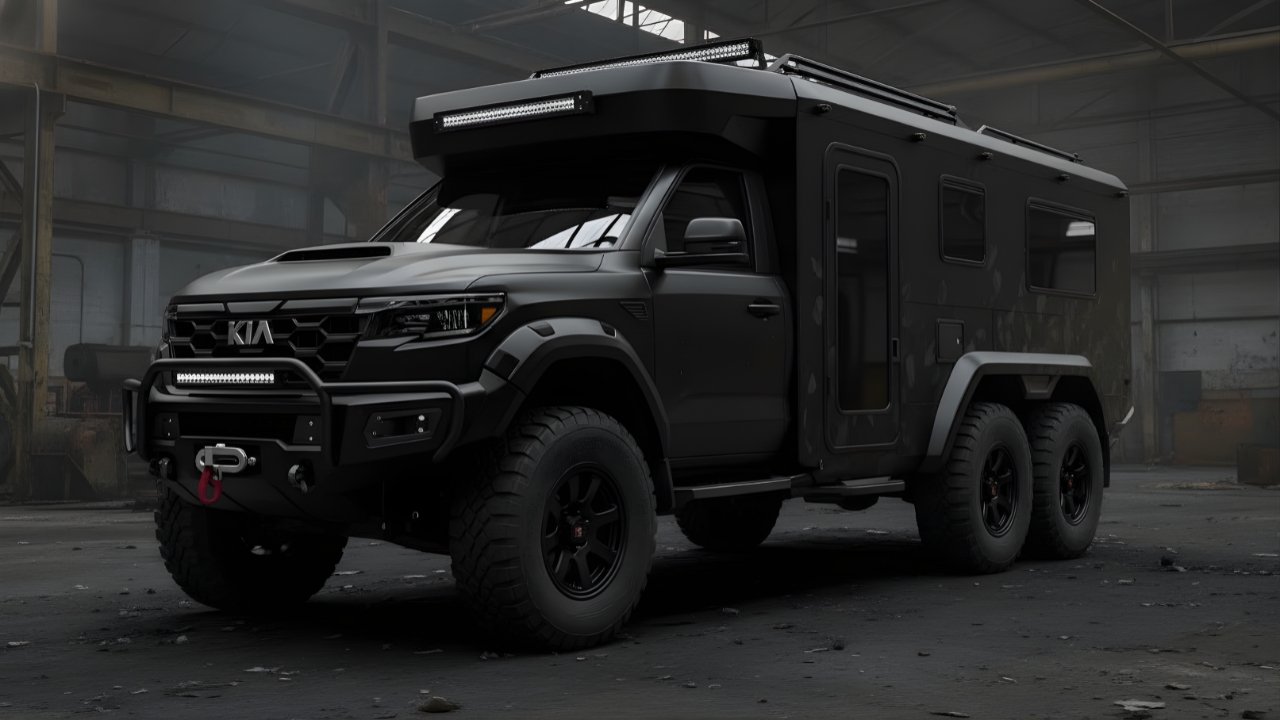
The 2026 Kia Camper Van arrives as a strikingly pragmatic rethink of what an accessible, comfortable camper can be, and the 2026 Kia Camper Van positions itself as a bridge between entry-level van conversions and pricier purpose-built motorhomes.
Kia’s approach was to take a compact footprint, wrap it in purposeful packaging and add genuine living convenience without inflating the price to the point of exclusion; the result is a vehicle that aims to be both weekend-ready for families and cost-effective for first-time RV owners. Designers and engineers worked from a clear brief: maximise usable interior space, keep vehicle mass and complexity manageable for everyday driving, and offer factory-backed options that integrate rather than retrofit critical systems such as beds, kitchens and power management.
That focus makes the 2026 Kia Camper Van attractive to buyers who want to avoid the hassles of aftermarket conversions while getting a tested, warrantied product that starts life as a functional road vehicle and ends life as a comfortable little home on wheels. In the following sections we walk through the van’s design, living layout, powertrains, technology, on-road behaviour and ownership considerations so prospective buyers can judge whether the 2026 Kia Camper Van matches their travel plans and budget.
Exterior Design and Practical Packaging
From the outside the 2026 Kia Camper Van reads as a purposeful, modern camper rather than a disguised cargo van, and exterior choices were driven by everyday usability: a low step for easy entry, flush roof mounting points for solar arrays or roof-top tents, and replaceable lower body cladding for rough tracks.
The short overall length keeps the 2026 Kia Camper Van city-friendly and easy to park while the carefully shaped roofline maximises internal headroom without creating an overly tall profile that catches crosswinds on highways. Bed access and cargo handling were prioritised: a wide rear hatch, low-load threshold and configurable modular lockers allow users to stow bikes, camping gear and kitchen modules with minimal effort.
Serviceability is a running theme—the 2026 Kia Camper Van’s critical access points are service-friendly, and exterior mounts for gas bottles, freshwater refill and external power inlets are located to be ergonomically convenient for camp setups. Lighting and visibility adopt durable LED systems with optional auxiliary work lamps to make late-night setups safe, and a factory-fitted awning integrates neatly to provide sheltered living space without aftermarket headache.
In short, the 2026 Kia Camper Van presents itself as a thoughtfully packaged, everyday-capable camper that can be customized with Kia-approved accessories while retaining warranty coverage.
Living Layout and Interior Versatility
Inside the 2026 Kia Camper Van the layout prioritises multi-use surfaces and clever storage so two to four occupants can live comfortably for short trips or extended weekends. The principal design aim was flexibility: seating converts into sleeping platforms, a compact kitchen module slides into an organised bay, and foldaway tables permit both dining and workstation use.
The floorplan places the galley along one side with a sink, two-burner hob and a compact refrigerator tucked under counter height to keep the centre of gravity low, while pull-out drawers and modular organisers handle cutlery, cookware and pantry items without turning the cabin into a jumble. A rear-facing lounge arrangement that converts to a king-size or two single beds is one of the 2026 Kia Camper Van’s strengths—its bed platforms stow flat for daytime use and lift easily into sleeping mode. Practicalities such as dedicated wet-room options, portable cassette toilets, and optional shower packages are available in higher trims so buyers can choose how self-contained they want to be.
Ventilation, light and privacy were treated as first-class features: roof vents, blackout blinds and strategic window placement ensure comfortable climate control and restful sleep while preserving outward visibility when driving. The 2026 Kia Camper Van therefore caters to owners who want a compact living space that behaves like a small apartment rather than an afterthought.
Power, Range and Efficiency
Kia engineered the powertrain options for the 2026 Kia Camper Van to balance driving efficiency with the electrical needs of living onboard. Efficient turbodiesel and modern gasoline engines provide ample torque and real-world economy for long-distance touring, while hybrid-assisted variants are offered in selected markets to reduce fuel stops and support quieter campsites.
Electrical architecture is particularly important for campers, and the 2026 Kia Camper Van supports an integrated leisure battery system with optional lithium upgrades, an intelligent charger and a factory-integrated solar interface so owners can run refrigeration, lighting and minimal cooking equipment off-grid for extended periods.
Charging logistics include a shore-power inlet for campsite hookups and smart energy management that prioritises fridge and safety-critical systems when battery reserves dip. Importantly, Kia validated thermal management systems for heavy-load use—engine cooling, alternator output and HVAC performance are all scaled to handle the extra load of camper life without compromising drivability.
For buyers prioritising long range and low operating costs the 2026 Kia Camper Van’s calibrated drivetrains and energy systems offer a credible compromise: comfortable motorway cruising that does not impose excessive refuelling or recharge demands during typical holiday itineraries.
On-Road Behaviour and Driving Comfort
Driving the 2026 Kia Camper Van feels closer to driving a modern compact MPV than an oversized motorhome; the compact platform and tuned chassis reduce paddle-shifts of motion and keep lane changes composed. Engineers tuned the suspension to absorb low-frequency bumps while controlling roll, which makes the van feel stable at typical touring speeds and confident on winding country roads. Steering is light enough for urban manoeuvres yet informative at speed so drivers feel connected to the road even with a loaded rear.
Noise, vibration and harshness (NVH) treatments were applied liberally: thicker glazing, tuned bulkhead insulation and chassis damping improve long-distance comfort and reduce driver fatigue on multi-hour drives. Safety systems such as adaptive cruise, active lane assist and hill-start assist make hauling a camper less stressful, and integrated multi-camera views simplify reversing into tight pitches.
Payload management is straightforward—the 2026 Kia Camper Van offers clear load ratings and user-friendly weight distribution advice so owners can plan trips sensibly and avoid overloading. The combined effect is a camper van that behaves predictably and confidently, encouraging longer trips without the intimidation factor of larger motorhomes.
Technology, Connectivity and Off-Grid Living
The 2026 Kia Camper Van brings meaningful tech that enhances both travel planning and off-grid convenience. The infotainment system features navigation optimised for low-emission zones and narrow roads, and route planning integrates known camper services such as water refill points, dump stations and low-clearance warnings.
Telematics include remote battery monitoring and energy usage dashboards so owners can see how long onboard systems will last and receive recommendations for conservation modes. For off-grid stays, the solar-ready architecture, smart inverter and configurable charging profiles reduce reliance on shore power while the van’s modular power outlets accommodate a mix of 12V, 230V/110V and USB sources for flexible device use.
Communications are supported by strong integrated 4G/5G modules in higher trims so owners can stay connected for work or streaming during downtime; optional router packages let multiple devices share a stable connection. Kia also offers a companion app that reports vehicle health, remaining power and nearest service centres—useful for long-distance travellers who want to avoid unexpected surprises. Taken together the technology package on the 2026 Kia Camper Van modernises camper living without turning the vehicle into a complex tech puzzle for new owners.
Ownership, Servicing and Value
One of the strongest selling points of the 2026 Kia Camper Van is the factory-backed ownership model: Kia designed the camper variants to be serviceable at authorised dealers, preserving warranty integrity while offering factory-fit options that avoid the tricky compromises of aftermarket conversions.
Routine service intervals are clear and service points such as filters and drains are placed to minimise labour time, which keeps maintenance costs predictable for owners and fleet operators. Resale value benefits from certified conversion modules and a documented factory fitment history, and Kia’s parts network was prepared to supply common camper components such as fridge units, pumps and gas fittings to reduce downtime.
Insurance and safety certifications are simplified by factory integration—buyers avoid complex paperwork and mis-matched approvals that sometimes plague bespoke conversions. For prospective buyers Kia recommends specifying the energy and wet-room packages that match intended use, and considering dealer-backed accessory bundles to preserve warranty and ensure compatibility.
Overall the 2026 Kia Camper Van presents a compelling value proposition: approachable purchase price, sensible running costs and the reassurance of OEM support that many converted campers lack.
Conclusion
The 2026 Kia Camper Van is a well-considered entry into the affordable camper market: compact enough for everyday driving, engineered for comfortable short- and medium-length journeys, and equipped with factory-integrated living systems that reduce complexity for owners.
Whether you are a weekend explorer, a small family seeking occasional escapes or a first-time camper buyer wanting an easy, warrantied solution the 2026 Kia Camper Van balances convenience, capability and cost in a way that should broaden the appeal of camper van ownership. Prospective buyers should experience the van with typical loads, request demonstrations of the energy management and kitchen systems, and verify dealer support for servicing and accessories in their region.
With pragmatic packaging, thoughtful energy systems and the reassurance of factory installation the 2026 Kia Camper Van stakes a strong claim as an affordable, modern and genuinely usable camper option.
Disclaimer:
This article is informational and based on likely feature sets, engineering directions and market positioning; readers should confirm exact specifications, options, pricing and availability with official Kia sources or authorised dealers before making a purchase decision.
