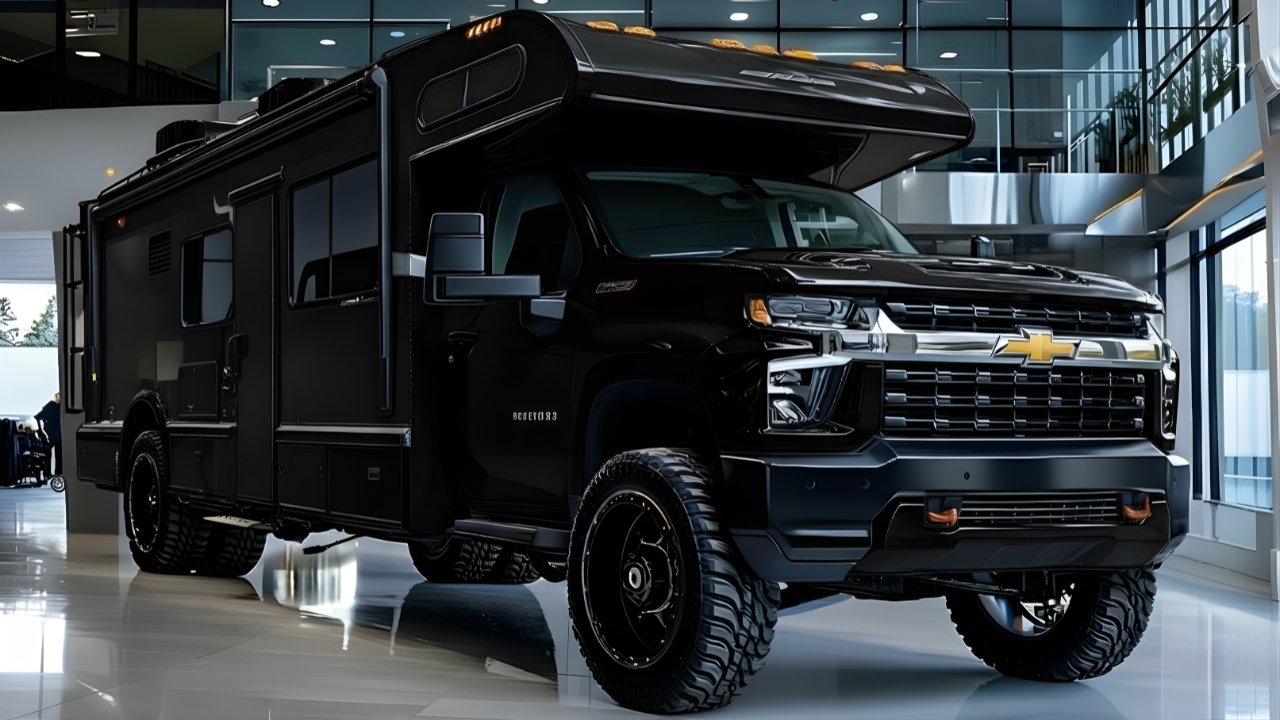
The arrival of the 2026 Chevrolet Motorhome represents a striking reimagining of what a factory-backed recreational vehicle can offer, blending automotive refinement with purposeful living space to create a vehicle intended for frequent use rather than occasional escapes.
From the outset the 2026 Chevrolet Motorhome was conceived as more than a badge on a chassis; it is the product of engineers and designers collaborating to build a motorhome that benefits from Chevrolet’s experience in durability, service networks, and parts availability while delivering living accommodations that feel thought-through and usable every day.
Buyers and reviewers noting the 2026 Chevrolet Motorhome emphasize how the vehicle’s packaging reduces compromise: driving ergonomics borrowed from modern light trucks, serviceability common to mainstream automobiles, and interior systems designed to simplify life on the road. For families, couples, and small owner-operators the 2026 Chevrolet Motorhome promises the reassurance of widespread service support while delivering a living environment that is comfortable, safe, and pleasantly livable for extended trips.
Design and Exterior Packaging
Visually the 2026 Chevrolet Motorhome strikes a balance between approachable styling and practical detailing, presenting a silhouette that is intentionally subdued rather than aggressively styled so it can fit into a variety of urban and rural settings while still offering significant onboard volume.
The exterior integrates aerodynamic elements to lower wind noise and improve long-distance efficiency, incorporating features such as optimized rooflines, underbody panels, and carefully profiled mirrors to reduce the drag penalties that typically plague large mobile homes.
Service access points are conveniently located and weather-protected, reflecting an intent to make routine checks and repairs straightforward for owners and technicians alike. Exterior lighting employs durable LED clusters with protective housings and long-life components that minimize maintenance, while cargo interfaces and attachments are robustly mounted to support modular accessories such as bike racks, rooftop boxes, and external kitchen setups.
Practical considerations such as multiple storage compartments, secure tie-down points, and flexible exterior power outlets make the 2026 Chevrolet Motorhome equally useful for weekend adventures and extended travel.
Chassis, Driveline and Efficiency
Underpinning the 2026 Chevrolet Motorhome is a chassis configuration tuned to reconcile highway composure with low-speed maneuverability, and the driveline choices reflect a careful balancing of range, towing capability, and day-to-day running costs.
Powertrain options range from efficient turbocharged combustion engines optimized for sustained cruising to hybrid-assisted systems that enhance low-speed refinement and urban fuel economy, and each variant is engineered for predictable torque delivery that helps drivers manage weight and grade without drama. Transmission calibrations ensure smooth, non-intrusive shifts while final-drive ratios are selected to keep engine speeds comfortable at interstate velocities, reducing both noise and wear.
For owners prioritizing lower operational expense the electrified variants provide meaningful reductions in city consumption through regenerative braking and electric assist during acceleration, while those focused on long-distance touring may prefer combustion-only options that offer extended range between refueling stops. Cooling and thermal management for the 2026 Chevrolet Motorhome are robust, with auxiliary systems to support sustained towing and heavy loads so the driveline remains stable in long-haul scenarios.
Interior Layout and Liveability
Inside the 2026 Chevrolet Motorhome the layout emphasizes zones that feel like extensions of a home: a compact but efficient galley, a comfortable seating and dining area, well-thought-out sleeping arrangements, and a hygienic wet area that performs reliably day after day. The design team focused on ergonomics and sightlines so that kitchen work, navigation, and entry/exit are intuitive and safe, and surfaces are chosen to withstand the realities of life on the road—resistant to scuffs, easy to clean, and pleasant to touch.
Storage is abundant and intelligently placed with secure latching systems to keep items in place while driving, and flexible cargo solutions allow owners to configure spaces for sports equipment, work gear, or leisure supplies with minimal effort. Climate systems are zoned to manage comfort in variable conditions, while insulation and acoustic treatments reduce external noise so the living space feels calm whether parked in a bustling campground or cruising along the interstate.
The sleeping solutions in the 2026 Chevrolet Motorhome range from fixed beds with supportive mattresses to convertible arrangements that maximize usable daytime space, making the vehicle adaptable for solo travelers, couples, or families on longer tours.
Technology, Connectivity and Safety
Technology in the 2026 Chevrolet Motorhome is applied to make long trips simpler and safer, with a driver environment that offers modern infotainment, integrated navigation tailored for large vehicles, and telematics that report vehicle health and maintenance reminders to both owner and dealer.
Infotainment systems include routing that accounts for height, weight, and restricted roads so drivers avoid unsuitable routes, and connectivity features allow passengers to stream media, keep up with work, or control onboard systems remotely when network coverage permits. Safety systems are comprehensive for a vehicle of this class, including adaptive cruise adapted for heavy, high-centre-of-gravity vehicles, lane-keeping support with calibrated thresholds, blind-spot monitoring scaled for wider mirrors, and collision mitigation tuned to the motorhome’s mass.
Passive safety receives equal attention: the 2026 Chevrolet Motorhome uses reinforced occupant zones and robust mounting for interior fixtures so that living components remain secure in the event of abrupt deceleration. For owners who tow additional trailers the motorhome includes trailer integration features such as sway mitigation and hitches with clear guidance for weight distribution, all designed to make heavy-duty tasks more predictable and less stressful.
Driving Experience and Practical Use
Driving the 2026 Chevrolet Motorhome reveals a vehicle that aims to make extended travel less fatiguing through ergonomic driver controls, improved visibility, and a suspension setup that minimizes motion transfer into the living space. Steering is weighted for stability at highway speeds while remaining responsive enough to negotiate tighter campground entrances or urban streets when necessary, and braking systems are sized and cooled to maintain performance under load.
NVH (noise, vibration, and harshness) suppression helps conversations and media playback feel natural in the cabin, and vibration isolation strategies protect delicate interior fixtures from the kind of wear that often plagues long-distance RVs. Owners who spend long periods on the road will appreciate the simplicity of the day-to-day controls and the easy access to service points, and the manufacturer’s dealer network provides confidence that spare parts and trained technicians are more accessible than with specialized coachbuilders.
Practical ownership features include clear maintenance schedules, straightforward diagnostics available through telematics, and optional service plans tailored to high-mileage use that help predict and smooth lifecycle costs.
Market Positioning and Ownership Value
The 2026 Chevrolet Motorhome is positioned to broaden the appeal of motorhome ownership by leveraging a mainstream brand’s scale and support infrastructure, offering prospective buyers a path into recreational vehicle life with fewer unknowns about service and parts.
Pricing strategy aims to provide competitive entry points across trim levels while offering upgrade packages for those who prioritize luxury appointments, advanced connectivity, or extended-range drivetrains, and fleet buyers can benefit from volume purchase options and tailored fleet telematics. Resale value will be influenced by perceived durability and the depth of dealer support, and the brand’s reputation for reliable components and a comprehensive service network plays to the motorhome’s favor when buyers consider long-term ownership.
For first-time motorhome owners the predictability of service and the availability of nationwide dealer support reduce the perceived risk of ownership, while experienced RV buyers may appreciate the pragmatic design choices that favor usability and longevity over fleeting trends. Community and aftersales programs designed around owner education, maintenance clinics, and manufacturer-backed warranties aim to reduce downtime and increase owner satisfaction over the vehicle’s service life.
Conclusion
In summary the 2026 Chevrolet Motorhome represents a thoughtful attempt to marry the practicality of mainstream automotive engineering with the particular demands of mobile habitation, producing a product that is engineered for regular use and supported by a broad service ecosystem.
It prioritizes pragmatic design, durable materials, and driveline choices that meet a variety of touring and towing needs while offering interiors that favor liveability and sensible workflows. For buyers who want the assurance of an established brand behind their recreational vehicle and the convenience of accessible service.
the 2026 Chevrolet Motorhome presents a compelling proposition that reduces many of the friction points associated with specialist-built motorhomes, and for those who value predictable ownership costs and dependable support the vehicle could change how motorhome ownership is perceived. Prospective owners are encouraged to evaluate specific configurations, verify service coverage in their region.
Arrange test drives or demo stays to ensure the vehicle aligns with their travel style and long-term plans.
Disclaimer:
This article is intended for informational purposes only and reflects a generalized analysis based on the vehicle concept and typical engineering approaches. Readers should consult official manufacturer specifications and arrange a personal evaluation or test drive to confirm features, exact specifications, and suitability for their individual needs.
